Choosing between an overhead and an underground water tank can be confusing. Both have their own advantages, and the right choice depends on your space, budget, and water usage needs.
What Is an Overhead Water Tank?
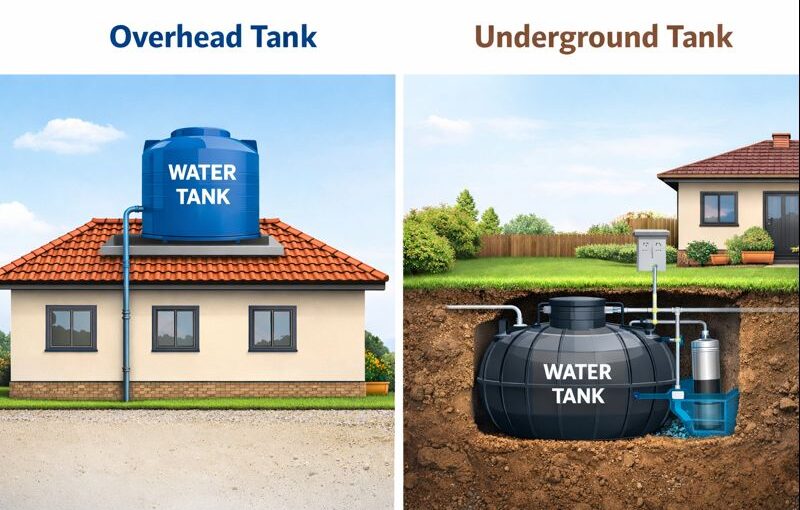
An overhead water tank is installed on the rooftop and supplies water using gravity.
Advantages:
- No need for continuous pumping
- Consistent water pressure
- Easy installation and maintenance
Disadvantages:
- Exposed to sunlight and weather
- Requires strong roof support
What Is an Underground Water Tank?
An underground tank is installed below ground level and stores large quantities of water.
Advantages:
- Saves rooftop space
- Natural temperature control
- Protected from direct sunlight
Disadvantages:
- Requires pumping to supply water
- Higher installation cost
Comparison Between Overhead and Underground Tanks
Feature | Overhead Tank | Underground Tank |
Installation | Easy | Complex |
Cost | Lower | Higher |
Maintenance | Easy | Moderate |
Water Pressure | Gravity-based | Pump-based |
Space Usage | Rooftop | Underground |
Which Tank Should You Choose?
- Choose an overhead tank if you want easy installation and daily convenience
- Choose an underground tank if you need large storage and have space constraints
Many homes use a combination of both for optimal water management.
Why Quality Matters
Regardless of type, always choose a water tank that is:
- UV resistant
- Made from food-grade material
- Durable and leak-proof
Conclusion
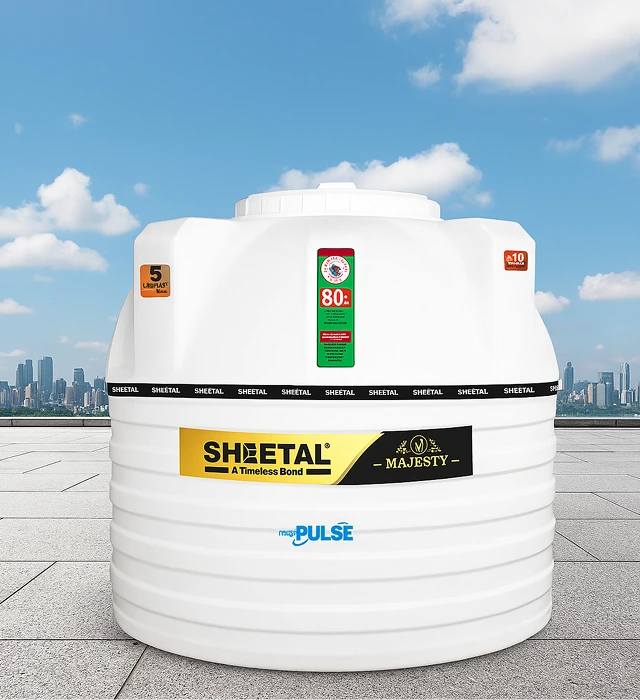
Both overhead and underground water tanks have their own benefits. The right choice depends on your home’s design and water needs. Sheetal Tank offers high-quality water storage solutions for both overhead and underground applications, ensuring safety, durability, and performance.